Brumbies Face Extinction While Snowy 2.0 Tears Through Kosciuszko National Park
Australians are outraged as the brutal aerial slaughter of Australia’s iconic brumbies (wild horses) resumes in Kosciuszko National Park (KNP), while Snowy 2.0 tears through one of the nation’s most fragile alpine ecosystems – the very landscape the horses are accused of destroying.
Filmmaker Lin Sutherland (TravelwildTV), photojournalist Aldwyn Altuney (Media Queen TV host/ Animal Action Events founder) and Viktoria Kirchhoff (FFW Representative Australia and Project Manager Horse Sanctuaries) have joined forces to speak up for our heritage brumbies across Australia.
Lin has just released a powerful short film, Songlines of the Brumbies, giving voice to the local Ngarigo people’s deep relationship with the brumbies and featuring Ngarigo horseman Andrew Wilesmith, exposing the true cause of the destruction tearing the heart out of his Kosciuszko homeland.
From 9 June to 11 July 2026, the NSW National Parks and Wildlife Service resumed aerial shooting of brumbies in Kosciuszko National Park. Lobbied by the Invasive Species Council and supported by RSPCA NSW, the operation allows horses to be shot up to 15 times from helicopters, raising serious animal welfare concerns and prompting widespread condemnation from animal welfare organisations and members of the public both in Australia and internationally.
“Imagine the horror of horses being relentlessly chased by helicopters, running for their lives while family members are shot before their eyes – stumbling away wounded and dying in agony. Or imagine the orphaned foals left behind, slowly starving beside the bodies of their dead mothers,” Lin Sutherland said.
Local residents fear the remaining heritage brumbies, which have roamed the Australian Alps for around 200 years, face the verge of extinction. At the same time, the Snowy 2.0 Pumped Hydro Project is blasting 40 kilometres of tunnels up to one kilometre beneath Kosciuszko National Park, creating one of Australia’s largest infrastructure projects inside one of its most sensitive natural landscapes.
“After the 2024 cull and before the 2026 cull, locals who regularly observed the brumbies knew there were far fewer than 3,000 horses remaining in the area,” Lin said.
“That number was critical to maintaining a viable population, yet the media reported 16,000 brumbies to justify park closures while major Snowy 2.0 infrastructure works were being carried out.”
Andrew Wilesmith, a Ngarigo horseman featured in Lin’s documentary Songlines of the Brumbies, believes the cultural and environmental significance of the region is being overlooked. “The Snowy 2.0 project is tearing the heart and soul out of Ngarigo Country. They’re raping our Country and are nothing more than environmental vandals.”
Bonrook demonstrates there is another way
For nearly four decades, Fondation Franz Weber (FFW) has demonstrated that humane alternatives to culling exist. In 1989, following international outrage over the helicopter shooting of brumbies, the Swiss animal welfare and nature preservation organisation purchased Bonrook Station in the Northern Territory and established the Wild Horse Sanctuary Bonrook.
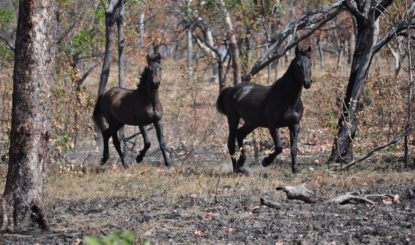
Today, approximately 800 brumbies roam freely – undisturbed and unhandled – across 495 km² of protected bushland alongside 120 wild cattle, 100 water buffalo, more than 150 bird species and numerous native animals, including rare and threatened species.
“All animals coexist harmoniously in natural equilibrium on Bonrook,” Viktoria said. “Based on nearly 40 years of real-life experience, FFW can confirm that brumbies pose no threat to Australian native flora or fauna, rather coexist harmoniously with native wildlife and ecosystems.”
Brumbies are among nature’s most effective natural gardeners. They help the environment by dispersing seeds through their nutrient-rich manure and grazing on tall dry vegetation which minimises bushfires and reduces fuel loads. Their grazing can help manage overgrown pastures and create spaces for smaller native wildlife to access fresh vegetation.
Viktoria continues: “Brumbies are not pests or feral. They have become an integral part of the mountains. They are the living descendants of the horses that arrived with the First Fleet in 1788 and have played an important role in Australia’s history through transport, farming, exploration and military service. They deserve recognition, respect and protection.”
Aldwyn Altuney is horrified by what is happening in KNP and believes many Australians are beginning to question the official narrative surrounding the culls. “We know that the brumbies are a scapegoat for major experimental infrastructure, carving out major areas of our protected national parks, which proves what the real damage to the environment is.”
Andrew says Aboriginal knowledge must play a central role in future land management. “They’re killing our lands, our water, our animals – everything. This has got to stop. Talk to us about the best way forward. Sit down with us and we’ll help educate you on how to properly manage Country.”
The three advocates are calling for an immediate halt to aerial shooting, greater transparency regarding the environmental impacts of Snowy 2.0 and genuine consideration of humane, long-term alternatives that protect both Australia’s unique biodiversity and its iconic wild horses.
CONTACTS
- ViktoriaKirchhoff, Project Manager Bonrook, ph: +61 415 499 583, email: viktoriakirchhoff@ffw.ch
- Aldwyn Altuney, AA Xpose Media Director / Photojournalist, ph: +61 409 895 055, email: aldwyn@aaxpose.com
- Lin Sutherland, TravelwildTV, ph: +61 413 131 088, email: belowh20@australiamail.com
To watch Songlines of the Brumbies and other TravelwildTV documentaries, visit:
https://www.youtube.com/TravelwildTV