FFW Position Statement: Fondation Franz Weber Calls for an End to the Mass Killing of Wild Horses in Australia
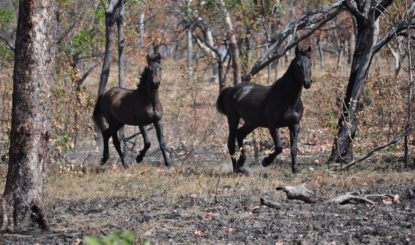
Fondation Franz Weber (FFW) is deeply distressed by the continued large-scale killing of wild horses (brumbies) in Kosciuszko National Park (KNP) and strongly opposes the use of lethal control methods, including both aerial and ground shooting. FFW calls for transparent, evidence-based and humane, non-lethal management of these horses.
Wild horses are sentient, intelligent and highly social animals that live in complex family groups. Their pursuit, shooting and killing – including within their family groups – causes immense suffering and cannot be accepted as a humane method of population management. FFW has consistently opposed lethal control and advocated for humane, non-lethal alternatives.
Serious Concerns About Population Estimates
FFW has serious concerns about the reliability of the population estimates used to justify the culling of wild horses in Kosciuszko National Park (Snowy Mountains). The substantial variation between population figures published in recent years further reinforces the need for full transparency about how estimates are produced, access to the underlying data and genuinely independent scrutiny of the methodologies used. Decisions that determine the fate of thousands of sentient animals must not be based on population figures whose reliability is open to serious question.
Brumbies Must Not Be Made the Scapegoat for Complex Environmental Pressures
FFW rejects the simplistic portrayal of wild horses as the cause of environmental degradation in Kosciuszko National Park. The park is subject to numerous pressures, including major infrastructure development, tourism, recreational activities and other human impacts. Environmental damage cannot simply be attributed to wild horses while significant pressures on the landscape are overlooked.
The Snowy 2.0 project by Snowy Hydro, for example, represents a major intervention in the alpine landscape, involving approximately 40 km of underground tunnelling. Environmental impacts in Kosciuszko National Park must be assessed consistently and comprehensively rather than selectively focusing on one species.
The Vital Ecological Role of Wild Horses
Brumbies play a vital ecological role and are among nature’s most magnificent gardeners. Through grazing, they help control excessive vegetation growth and consume tall, dry grasses, reducing bushfire fuel loads; coarse vegetation is recycled and fresh growth made accessible to other herbivores.
Furthermore, their manure forms natural humus improving soil quality, microbial life, water retention and plant growth. The wild horses’ semi-nomadic movement disperses seeds, supporting regeneration and biodiversity.
Part of Australia’s Living Heritage
Wild horses are an important part of Australia’s cultural and pastoral heritage. Their ancestors have been part of Australia’s history since European settlement and contributed to transport, agriculture, exploration and military service. For many Australians, brumbies represent resilience, freedom and an enduring connection to the country’s history and identity.
The wild horses of the Snowy Mountains have lived in this landscape for generations. They should not be reduced to population figures or treated simply as a problem to be eliminated.
Humane Management – Not Mass Killing
Fondation Franz Weber calls for an end to the culling of wild horses in Kosciuszko National Park, including aerial and ground shooting. FFW calls for independent scrutiny of the population estimates and methodologies used to justify current management decisions and for full transparency of the underlying data.
Where population management can be demonstrated to be necessary, humane, non-lethal approaches must be prioritised, including responsible rehoming and appropriate fertility-management measures.
FFW’s Wild Horse Sanctuary Bonrook Demonstrates That Another Way Is Possible
Fondation Franz Weber has nearly four decades of hands-on experience protecting free-roaming wild horses at Bonrook (Franz Weber Territory) in the Northern Territory.
Established in 1989 by FFW following international outrage over the aerial shooting of wild horses, the 495 km² sanctuary provides a protected natural habitat where brumbies live freely and undisturbed in their family groups alongside numerous native species.
FFW’s experience at Bonrook demonstrates that wild horses can coexist with native wildlife within a functioning ecosystem. Around 800 wild horses live across the sanctuary alongside wild cattle, water buffalo, more than 150 bird species and numerous native animals. Government land assessments have consistently rated Bonrook’s land condition as “good” to “very good”.
This decades-long, real-world experience challenges the assertion that wild horses are inherently incompatible with healthy Australian landscapes and native wildlife.
Australia Must Take Responsibility
Fondation Franz Weber is deeply disappointed that, for decades, a small Swiss animal welfare organisation has carried a significant share of the burden of protecting Australia’s wild horses. For nearly 40 years, FFW has operated Bonrook, a 495 km² sanctuary for brumbies in the Northern Territory – fully funded by donations from Switzerland.
Australia is a wealthy, developed democracy with numerous established animal welfare organisations and the resources and expertise to take responsibility for the treatment of its own wild horses.
Australia’s elected political representatives must pursue solutions that reflect public concern, animal welfare and respectful treatment of these horses. Australia has the democratic institutions, expertise and resources to choose a different path.
At the same time, FFW calls on Australia’s many animal welfare organisations to treat the plight of the Kosciuszko National Park brumbies with the urgency it deserves, to take a strong stand against their large-scale killing, and increase political pressure for humane, non-lethal solutions. It is time for Australia to take responsibility – and to replace mass killing with evidence, transparency, compassion and responsible, humane management.
Download FFW’s Position Statement as PDF
Click here to go to the project page “Wild Horse Sanctuary Australia”.